
35 Years of the Institute’s History
“Socioculture, community centers, participation“ – during the 1980s, a noticeable shift in thinking took place in social research. Following the expansion of social infrastructure in the 1960s and 1970s, the focus shifted towards approaches based on grassroots democracy. Large-scale, state-run, hierarchical projects lost public support, while decentralised, self-governing structures became increasingly important. During this period, social research intensively examined how social networks and civic engagement, in accordance with the principle of subsidiarity, could replace state-provided welfare with self-determined interventions.
Goethe University in Frankfurt am Main also pursued this line of enquiry through its own research projects. This led to the establishment of a “Social Infrastructure Working Group” in the early 1990s. Building on this work, four of its members – led by Karin Stiehr – founded the ‚Institute for Social Infrastructure GbR‘ in 1991 as a private social science research institute.
Core topics in the early years
In the early years, the institute’s primary focus areas were largely shaped by this social trend. The emphasis was on civic engagement, particularly in policies for older adults. In line with the concept of action research, all projects and studies were geared towards practical application. They were intended as a tool to support the implementation of social policy goals and address needs precisely.
Volunteer Services, Civic Engagement, and Senior Citizens‘ Policy
On behalf of the Federal Ministry for Education, Family Affairs, Senior Citizens, Women and Youth, as well as various state governments, a large number of research projects were carried out until 2014. These projects focused on creating conditions that encourage older people to volunteer, as well as on the role of independent organisations and local governments in designing structures that promote civic engagement. In this context, the institute initiated and supported the Volunteer Card scheme in several federal states, participated in developing the ‚Engagement Guides‘ concept and provided training and counselling for volunteers.
To facilitate the direct exchange of experiences among organisations, volunteers and other stakeholders, outreach and communication activities were initiated and carried out. These activities were complemented by numerous workshops and conferences.
One key focus area that continues to shape the Institute’s profile today is ageing. The primary focus is and has always been on:
- The social participation of older adults
- Health-conscious ageing through sports and physical activity
- Strengthening the participatory rights and quality of life of residents in residential care facilities
- Improving the living conditions of older women in Europe
Network expansion and Europe
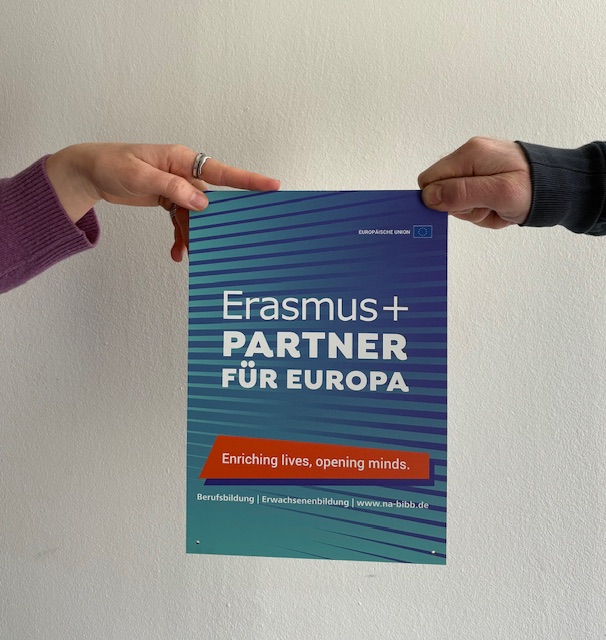
From the very beginning, the Institute participated in local projects and systematically built a network of European partner organisations. This commitment continues to benefit us to this day.
Looking back at the 1990s, we can see how the European project landscape has changed. While digital calls for proposals and online applications now define everyday life, back then, pioneering work was truly required. Project ideas were presented directly on site at the European Commission in Brussels to secure funding support and signatures in person. We still draw on the long-standing contacts forged during this period in our numerous international collaborations today. These collaborations foster a broader perspective and encourage the cross-border exchange of good ideas in social and educational policy.
New leadership and expanded focus areas
Thirty-five years of social research reflect the evolution of socially and politically relevant issues. Alongside the expansion of our geographic and thematic networks, the composition of our shareholder base changed in 2004. Dr Hannelore Jani (Paris) and Dr Karin Stiehr (Frankfurt am Main), who met while working on European social gerontology projects, became the new partners at the helm of the institute. Thanks to Dr Jani’s expertise as a gerontologist, dementia and long-term care in particular have become key areas of focus for the institute.
You can read more about our project history here.
Moving to the Ökohaus
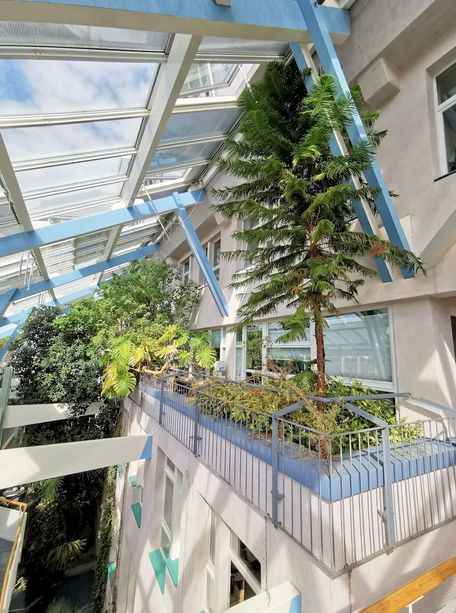
The Ökohaus in Frankfurt’s Bockenheim district continues to fascinate with its extraordinary design, featuring a green exterior façade, a babbling brook in the foyer and trees growing inside the building. Here, sustainability is the top priority – from natural climate control and offsetting soil sealing to the reuse of grey water and decentralised electricity generation. We are proud to being part of this innovative building concept for over 22 years.
Name Changes and Generational Transition
Over the years, the institute has adapted its legal structure, gaining recognition as a non-profit organisation in 2021. In 2022, Dr Karin Stiehr stepped down from the executive board, and long-standing employees Jana Eckert (who started as an intern in 2013) and Jesper Schulze (who has worked as a research associate since 2019) took over as co-directors. In 2025, Dr phil. Katrin Fröhlich, who also works as a research associate at the institute, joined the group of shareholders. In 2026, in its 35th year of existence, the institute was renamed IFSI Institut für soziale Infrastruktur gGmbH. Learn more about our current staff here.
Present and Future
Today, our work focuses on ageing and ageism, health and care, social participation, discrimination, loneliness and lifelong learning. Within this framework, we carry out local projects, studies and evaluations in the wider Frankfurt am Main area, as well as nationwide and Europe-wide initiatives in collaboration with various partner organisations.
We would like to express our sincere gratitude to our partners for their many years of collaboration and for the trust they have placed in us. We are looking forward to the future with great anticipation and are excited about all the upcoming projects, staff members and initiatives!
You can find out more about our current projects on the relevant project pages: